11. Government Animal Testing Facility
Just on the outskirts of St. Ives in Cambridgeshire, is Houghton Grange, Former Government Biological Research Lab, which now moved to the Infamous Palbright site.
I’ve struggled to find much history on this place. It seems the government have no interest in publishing any history of the site, and locals are extremely cagey to even talk about the site at all.
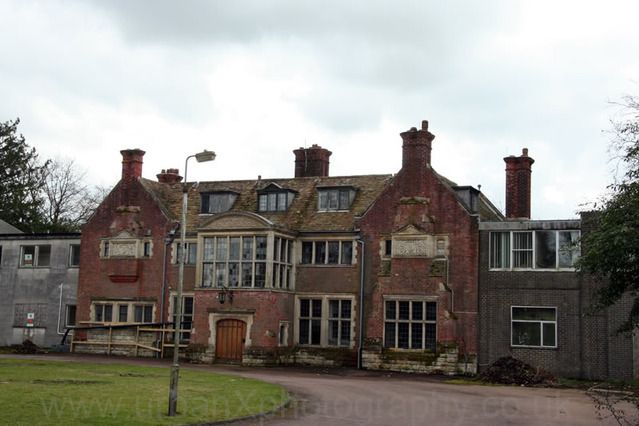
The site is massive, I’ve heard quotes of around 100 acres all in, which seems about right. A recent planning application proposes to re-develop 10 of those Hectares into housing. The site is well organised and labs are even arranged into ‘streets’
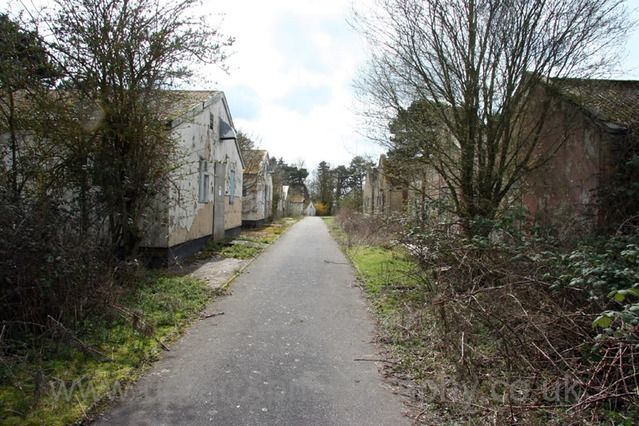
Some labs are enclosed, some are arranged around open (albeit locked) courtyards. A central channel is carved into the concrete to drain fluids. The sense of functionality and security begin to hit me. There is netting over the courtyard to stop any avian intruders.
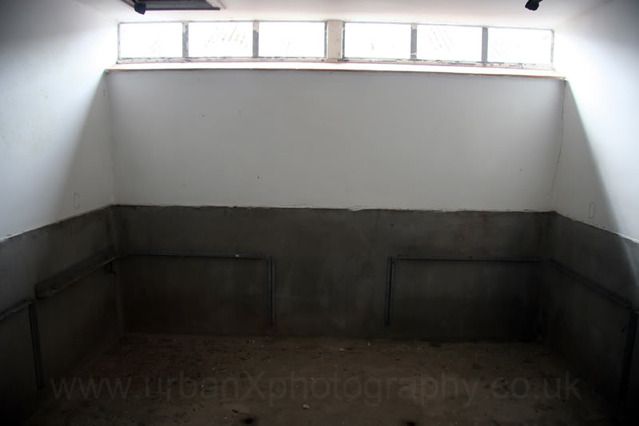
The cells feature bare concrete walls and waterproofed floors. There is an outline formed in metalwork on the walls, outlining a missing structure the size and shape of a restraint table.
A common factor however is rows and rows of plain, numbered blue doors.
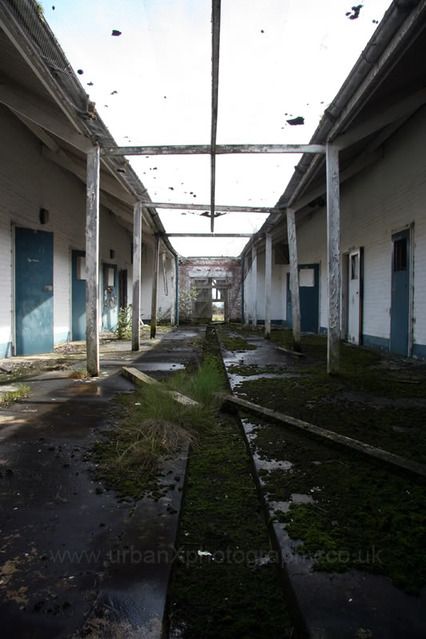
Covered Labs:
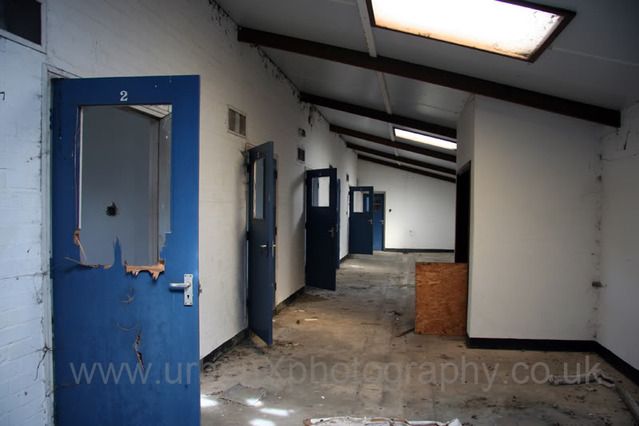
Restraint Room:
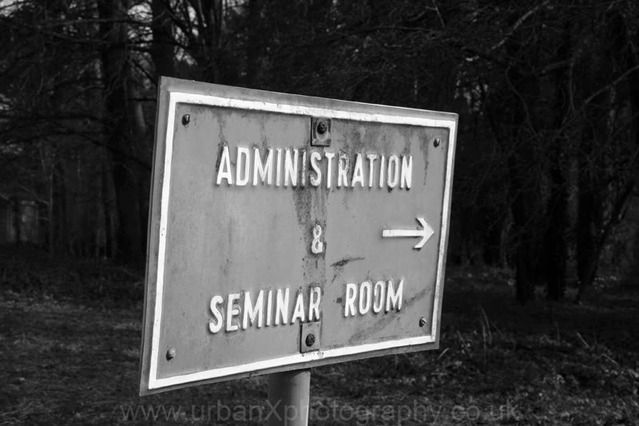
Administration Building:
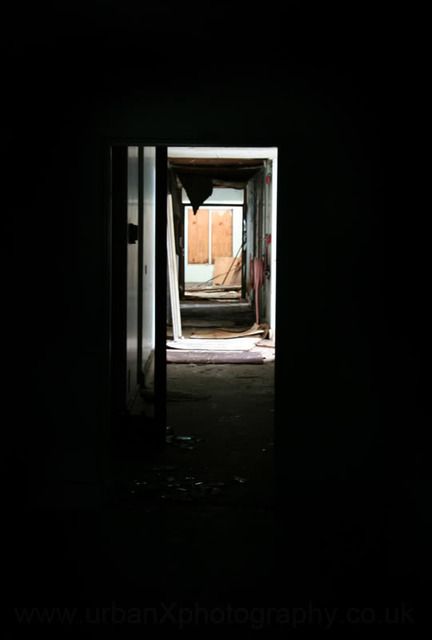
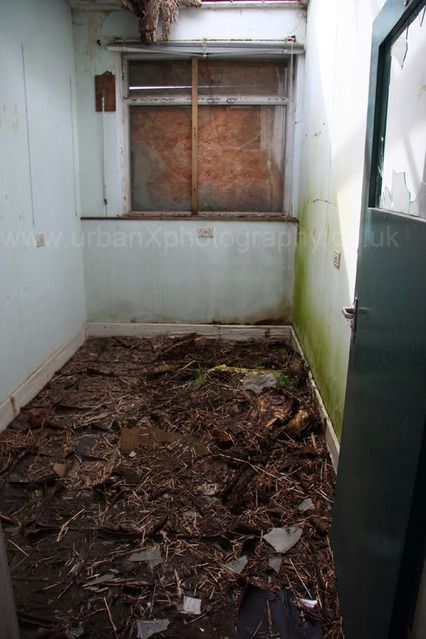
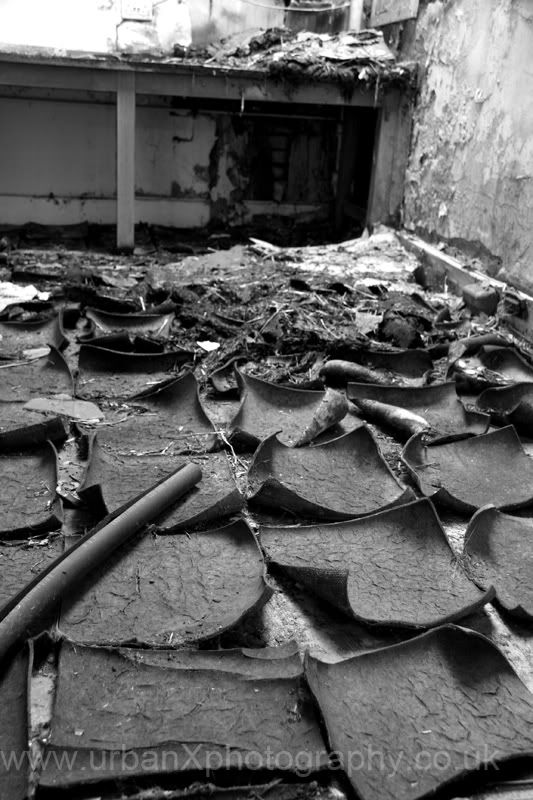
All of the windows were boarded up, and from the outside the building looked secure. However once inside, it appeared that the entire roof was missing. It didn’t take long for me to find it – on the floor of the top storey. The insulation had formed a mattress of organic matter which was now starting to harvest flora, ironically dropped from passing birds
Laboratory X
Exploring an abandoned “Government Animal Testing Facility” one expects to find some pretty unpleasant things. By now we’d wandered through maybe fifty labs, and so far nothing too appalling or shocking…until we came across this building.
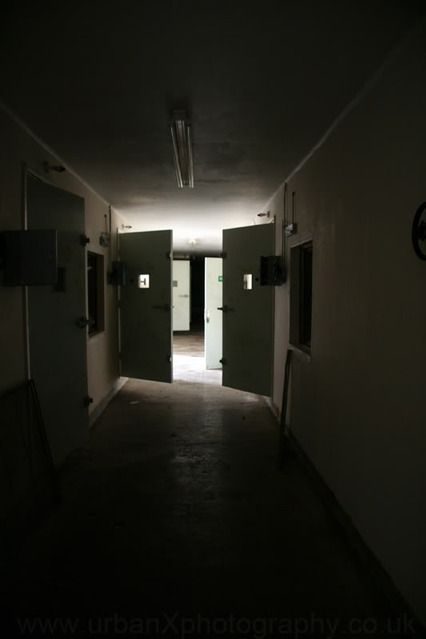
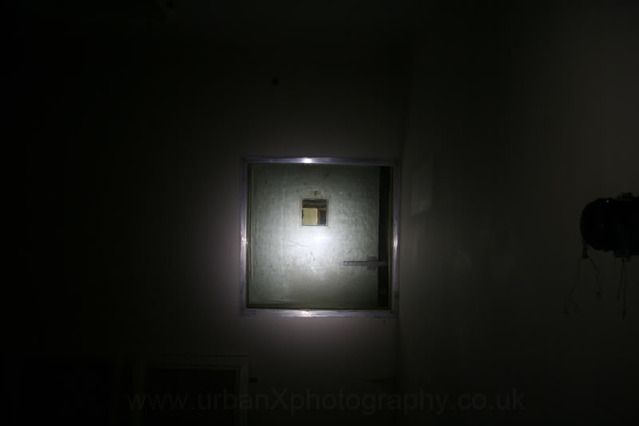
I entered through a small crack in a door. The building had been completely boarded up, and was in complete darkness, this had created a pinhole camera effect.
This was amplified further by the fact that our image was being projected onto a convex acrylic screen, creating a massive Camera Obscura, showing a live image of me emerging through the opening.
Really Bizarre.
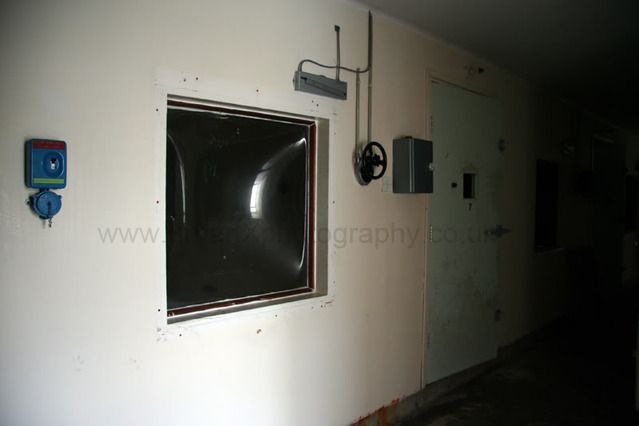
Each of the cells had these convex viewing panels. Next to the viewing panel you can see the thick steel cell doors. These were triple locked (big, big locks). These led through a double airlock system, to a shower area which you have to pass through to get to the locked cell.
The level of ‘Biological’ security here was becoming unnerving. It was a lot more secure than the rest, not in an urbex sense, but in the ‘in-use’ sense.
“This LAB moved to Palbright where they continued research into H1N1 Virus(bird flu).Its a legend that they cant re-develop site as it may release virus spores into the atmosphere”
– Shadowman April 2010
The convex viewing window as seen from ‘cell side’
Each room was highly controllable from the outside. There were manometers, to measure the air pressure in the room. I noticed that this measured negative as well as positive pressure, i.e. they could inflate, or vacuum the environment. There we also fan speed controllers to modify this air pressure in the cell.
Lastly on the control panel is a unit warning when the underground waste water tank is full. This was important with a facility like this as anything leaving the cell, had to be boiled before being released into drain network...
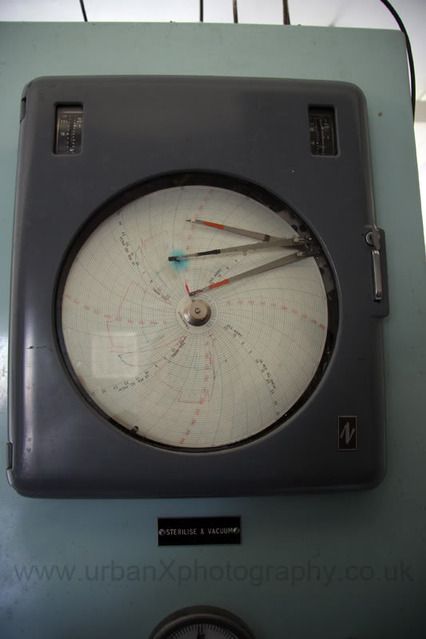
Retro-sterilising / vacuum machine: It’s easy to forget that you’re standing in a building which has lain derelict for 20 years.Note also although the grille has fallen open, there is another behind it…and another behind that.
Whatever went on here, they really didn’t want anyone, or anything getting in - or out.
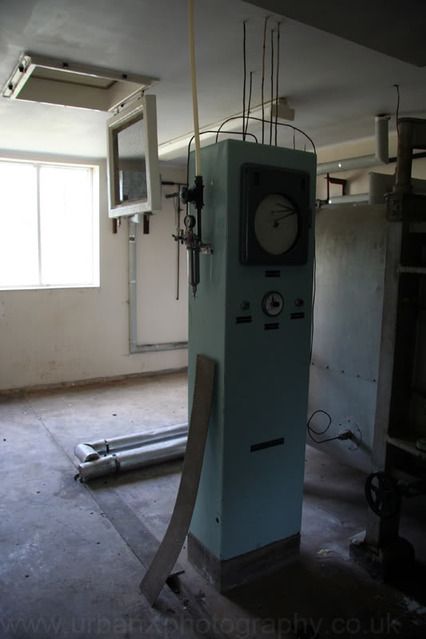
I began to notice that this lab was worryingly more ‘self-contained’ that the others. It was the only one with its own incinerators, and ‘post-mortems’ room.
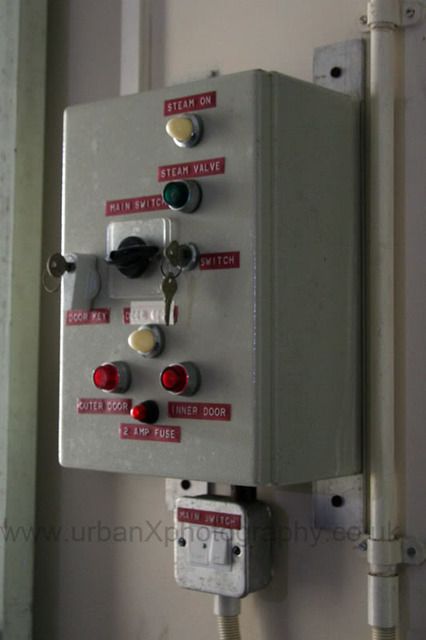
All of the key switches sit in the same position they were left in 1989. When these were left the Lambada had just broken into the UK top 10.
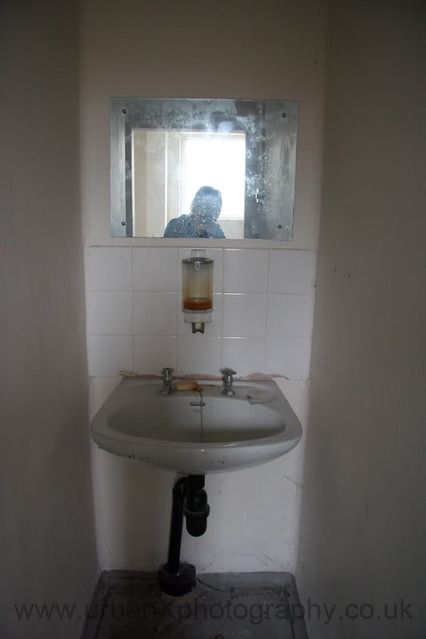
There’s still soap on the sink, and 20 year old soap in the dispenser...
My mind begins racing with the thoughts of the atrocities that must have happened here.
I try my hardest not to think about it anymore as I enter “Cell 13”... alone.
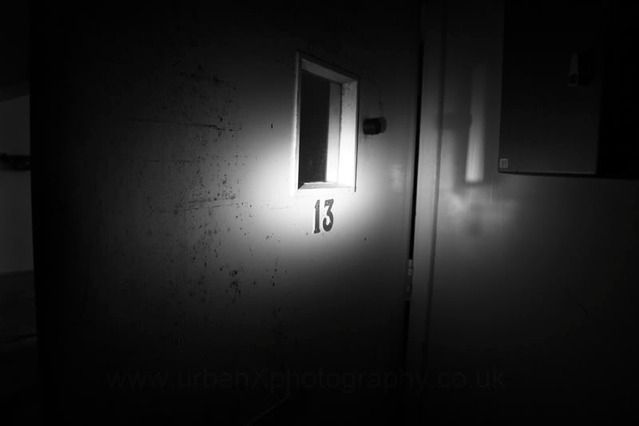
Again, through an air-locked steel door, which is clamped tight into place by rubber seals which are operated by tightening up a wheel similar to those found on submarine hatches. I climb through the chemical shower, then through yet another airlock.
I sit for a moment in the pitch black. The smell of chlorine mixed with another chemical I can’t recognise lightly burns the inside of my nostrils.
I’m petrified.
The beating of my heart becomes louder; so loud, it echoes down the corridor. How can my heartbeat echo down the corridor?
Hang on, they’re footsteps...
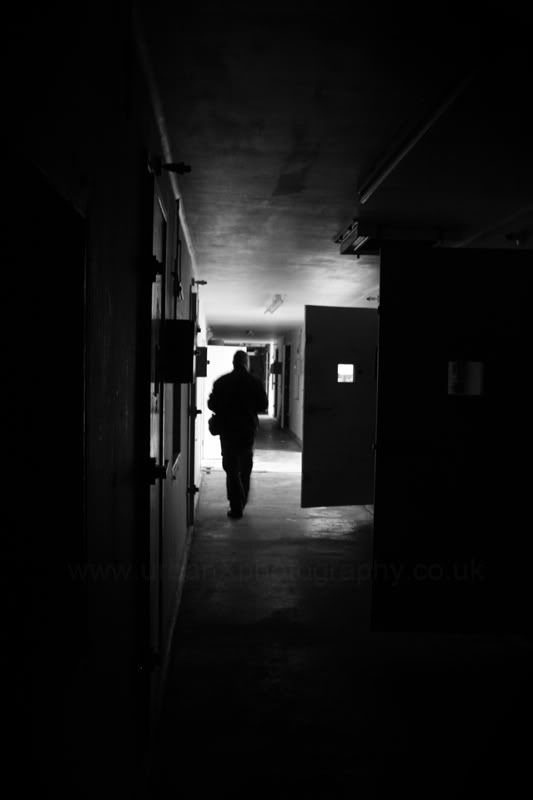
The Grange:
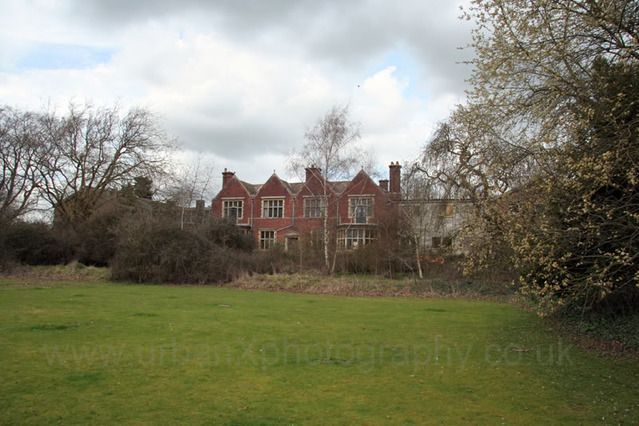
After that episode I could do with a nice manor house. Oh, there’s one:
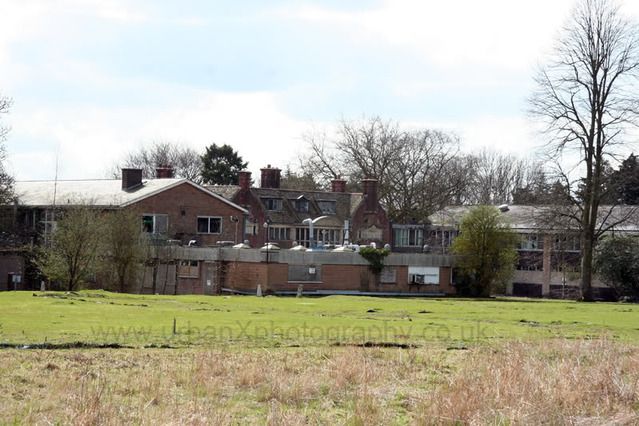
Even from a distance its beauty is spoilt by the labs which flank it. Below: Inside the labs.
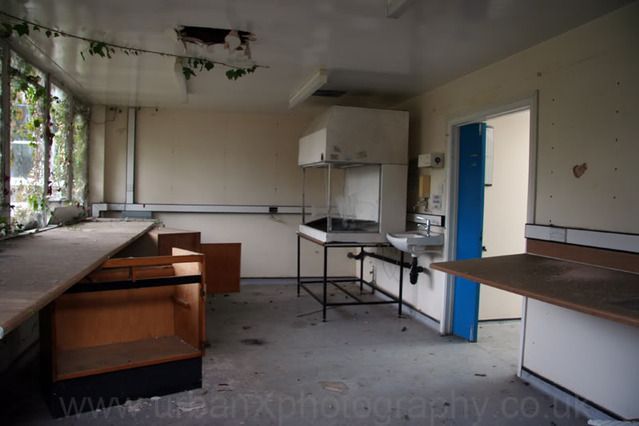
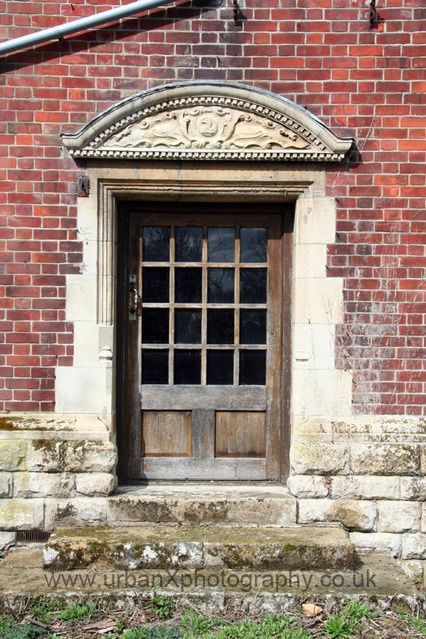
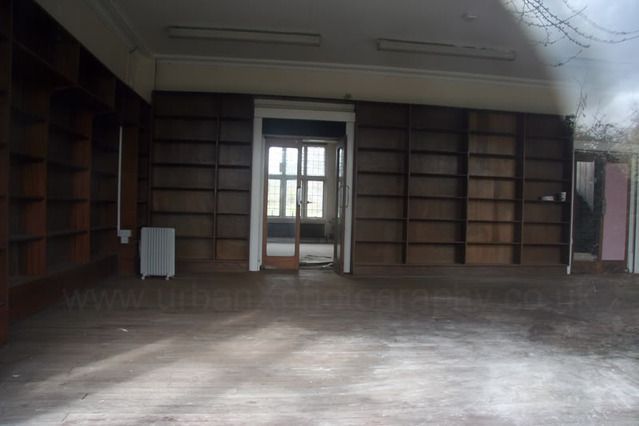
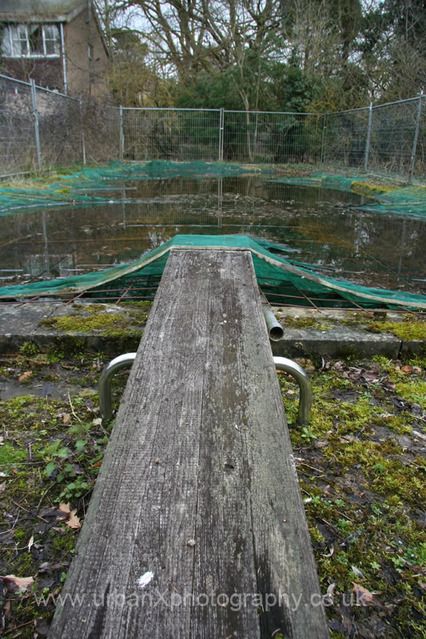
Security now occupies the grange 24/7. You can see on the left of the porch, that they’ve crudely rigged up a waste pipe up to an above ground septic tank
I finally tiptoe around the back and disappear into the undergrowth before I’m spotted.
Epilogue:
There are a couple of reports which were written at Houghton Grange available through either Harvard or Cambridge University (at £13 each). The abstracts are free, and most of them seem to be poo related. My favourite being “Incidence of Salmonellae in Faeces of dogs suffering from distemper” - H. Williams Smith 1950.
The site is fenced off with barbed wire, and is patrolled continually by security.
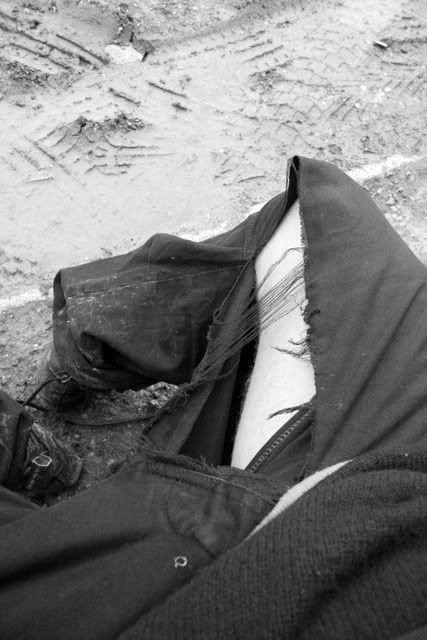
I found this out the hard way. Whilst scaling the perimeter fence my crotch became ensnared in the barbed wire, and completely shredded my combat trousers, missing my testicles by millimetres.
To add to the humiliation, security (and their dogs) witnessed the whole thing. Effectively putting an end to my day before it had started. Undeterred, a 5-hour game of cat-and-mouse ensued to produce this report.
I’ve struggled to find much history on this place. It seems the government have no interest in publishing any history of the site, and locals are extremely cagey to even talk about the site at all.
The site is massive, I’ve heard quotes of around 100 acres all in, which seems about right. A recent planning application proposes to re-develop 10 of those Hectares into housing. The site is well organised and labs are even arranged into ‘streets’
Some labs are enclosed, some are arranged around open (albeit locked) courtyards. A central channel is carved into the concrete to drain fluids. The sense of functionality and security begin to hit me. There is netting over the courtyard to stop any avian intruders.
The cells feature bare concrete walls and waterproofed floors. There is an outline formed in metalwork on the walls, outlining a missing structure the size and shape of a restraint table.
A common factor however is rows and rows of plain, numbered blue doors.
Covered Labs:
Restraint Room:
Administration Building:
All of the windows were boarded up, and from the outside the building looked secure. However once inside, it appeared that the entire roof was missing. It didn’t take long for me to find it – on the floor of the top storey. The insulation had formed a mattress of organic matter which was now starting to harvest flora, ironically dropped from passing birds
Laboratory X
Exploring an abandoned “Government Animal Testing Facility” one expects to find some pretty unpleasant things. By now we’d wandered through maybe fifty labs, and so far nothing too appalling or shocking…until we came across this building.
I entered through a small crack in a door. The building had been completely boarded up, and was in complete darkness, this had created a pinhole camera effect.
This was amplified further by the fact that our image was being projected onto a convex acrylic screen, creating a massive Camera Obscura, showing a live image of me emerging through the opening.
Really Bizarre.
Each of the cells had these convex viewing panels. Next to the viewing panel you can see the thick steel cell doors. These were triple locked (big, big locks). These led through a double airlock system, to a shower area which you have to pass through to get to the locked cell.
The level of ‘Biological’ security here was becoming unnerving. It was a lot more secure than the rest, not in an urbex sense, but in the ‘in-use’ sense.
“This LAB moved to Palbright where they continued research into H1N1 Virus(bird flu).Its a legend that they cant re-develop site as it may release virus spores into the atmosphere”
– Shadowman April 2010
The convex viewing window as seen from ‘cell side’
Each room was highly controllable from the outside. There were manometers, to measure the air pressure in the room. I noticed that this measured negative as well as positive pressure, i.e. they could inflate, or vacuum the environment. There we also fan speed controllers to modify this air pressure in the cell.
Lastly on the control panel is a unit warning when the underground waste water tank is full. This was important with a facility like this as anything leaving the cell, had to be boiled before being released into drain network...
Retro-sterilising / vacuum machine: It’s easy to forget that you’re standing in a building which has lain derelict for 20 years.Note also although the grille has fallen open, there is another behind it…and another behind that.
Whatever went on here, they really didn’t want anyone, or anything getting in - or out.
I began to notice that this lab was worryingly more ‘self-contained’ that the others. It was the only one with its own incinerators, and ‘post-mortems’ room.
All of the key switches sit in the same position they were left in 1989. When these were left the Lambada had just broken into the UK top 10.
There’s still soap on the sink, and 20 year old soap in the dispenser...
My mind begins racing with the thoughts of the atrocities that must have happened here.
I try my hardest not to think about it anymore as I enter “Cell 13”... alone.
Again, through an air-locked steel door, which is clamped tight into place by rubber seals which are operated by tightening up a wheel similar to those found on submarine hatches. I climb through the chemical shower, then through yet another airlock.
I sit for a moment in the pitch black. The smell of chlorine mixed with another chemical I can’t recognise lightly burns the inside of my nostrils.
I’m petrified.
The beating of my heart becomes louder; so loud, it echoes down the corridor. How can my heartbeat echo down the corridor?
Hang on, they’re footsteps...
The Grange:
After that episode I could do with a nice manor house. Oh, there’s one:
Even from a distance its beauty is spoilt by the labs which flank it. Below: Inside the labs.
Security now occupies the grange 24/7. You can see on the left of the porch, that they’ve crudely rigged up a waste pipe up to an above ground septic tank
I finally tiptoe around the back and disappear into the undergrowth before I’m spotted.
Epilogue:
There are a couple of reports which were written at Houghton Grange available through either Harvard or Cambridge University (at £13 each). The abstracts are free, and most of them seem to be poo related. My favourite being “Incidence of Salmonellae in Faeces of dogs suffering from distemper” - H. Williams Smith 1950.
The site is fenced off with barbed wire, and is patrolled continually by security.
I found this out the hard way. Whilst scaling the perimeter fence my crotch became ensnared in the barbed wire, and completely shredded my combat trousers, missing my testicles by millimetres.
To add to the humiliation, security (and their dogs) witnessed the whole thing. Effectively putting an end to my day before it had started. Undeterred, a 5-hour game of cat-and-mouse ensued to produce this report.
No photos have been added to this portfolio yet or the previously uploaded photos have been removed.
To get in touch, please use the contact page.
To get in touch, please use the contact page.